
 English
 Spanish
 French
 German
 Italian
 Chinese (Simplified)
 Japanese
 Korean
 Arabic
 Portuguese

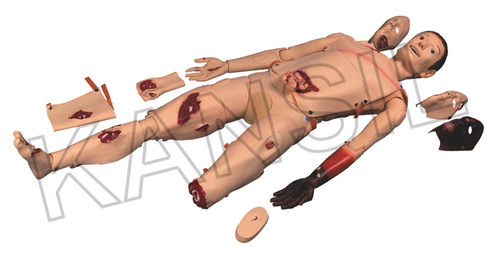
Advanced Trauma Simulator Model
Product Details:
- Features Interchangeable Wounds, Bleeding Function, Articulated Limbs, Replaceable Parts
- Size Full-Size Adult
- Model No ATS-180
- Assembly Pre-assembled, Ready To Use
- Weight 28 kg
- Power Type Manual Operation / Optional Electric Pump
- Use Medical Training, Trauma Response, Emergency Simulation
- Click to View more
X
Advanced Trauma Simulator Model Price And Quantity
- 1 Box
- Detachable, washable, and replaceable
- Hemorrhage control, airway management, IV access, wound packing
- Meets international training standards
- Surface washable with standard disinfectants
- Medical students, paramedics, emergency responders
- Lacerations, abrasions, amputations, punctures, gunshot wounds, burns
- Movable joints for realistic positioning
- Wound props, simulated blood, carry case
Advanced Trauma Simulator Model Product Specifications
- Full-Size Adult
- Interchangeable Wounds, Bleeding Function, Articulated Limbs, Replaceable Parts
- Advanced Trauma Simulator Model
- High-Quality PVC, Silicone, Metal Inserts
- Simulates Traumatic Injuries, Hemorrhage Control, Fracture Management, CPR Practice
- ATS-180
- Pre-assembled, Ready To Use
- Adult
- 28 kg
- Manual Operation / Optional Electric Pump
- Medical Training, Trauma Response, Emergency Simulation
- Durable, Reusable, Anatomically Accurate, Easy Maintenance
- Smooth, Life-like Texture
- Height 180 cm, Width 45 cm, Length 33 cm
- Flesh-Toned, Realistic
- Realistic Full Body
- Human
- Detachable, washable, and replaceable
- Hemorrhage control, airway management, IV access, wound packing
- Meets international training standards
- Surface washable with standard disinfectants
- Medical students, paramedics, emergency responders
- Lacerations, abrasions, amputations, punctures, gunshot wounds, burns
- Movable joints for realistic positioning
- Wound props, simulated blood, carry case
Advanced Trauma Simulator Model Trade Information
- 500 Box Per Day
- 1 Week
Product Description
Advanced Trauma Simulator
Features:
- Washing, disinfection, hemostasia,enswathement etc.
- Open fracture, truncation trauma
Features of Advance trauma manikin:
- Facial burn: I, II, III degree
- Laceration in forehead
- The wound in jaw
- Opened clavicular fracture and contusion wound on the chest
- The wound in abdomen with small intension evisceration
- Opened humerous fracture of right upper arm
- Opened fracture of right hand (including parenchyma laceration, fracture and bone tissue exposure)
- Gun wound in the right palm
- Opened fracture of right thighbone
- Compound femur fracture of left thigh
- Metal pricking wound in right thigh
- Opened tibia fracture of right leg
- Opened fracture of right foot with truncating trauma on small phalanx
- Burns in left forearm: I, II, III degree
- Truncating trauma on left thigh
- Closed tibia fracture of right leg and contusion wounds in left ankle and foot.
Realistic Wound Simulation
This simulator provides an authentic training experience with interchangeable wounds designed to replicate real-life traumatic injuries. Each wound can be detached, cleaned, or replaced to match various scenarios, such as lacerations, tears, amputations, and burns, ensuring multiple users benefit from repeated practice without compromising hygiene or quality.
Comprehensive Emergency Skills Training
With features like bleeding function and articulated limbs, users can practice essential procedures such as hemorrhage control, joint positioning, airway management, and IV access. This versatility enables targeted trauma response training and fracture management, preparing learners for real-world medical emergencies.
Ease of Use and Maintenance
The ATS-180 model is pre-assembled and ready to use out of the box. Its detachable, washable skin and replaceable parts streamline cleaning and upkeep. The model is robust, yet lightweight enough for easy transportation and ready deployment in any training environment.
FAQs of Advanced Trauma Simulator Model:
Q: How do you use the Advanced Trauma Simulator Model for trauma training?
A: Simply position the pre-assembled model in your chosen training area, attach the desired wound props or accessories, and utilize the simulated blood for realistic hemorrhage control exercises. The articulated limbs and lifelike skin enable practice in airway management, IV access, and other emergency procedures.Q: What medical procedures can be practiced with this simulator?
A: The ATS-180 allows for training in hemorrhage control, airway management, intravenous access, wound packing, CPR, and fracture management. Its realistic wound types and replaceable parts enable comprehensive trauma response training for a variety of emergent scenarios.Q: When should the skin or wound components be washed or replaced?
A: The detachable skin and wound inserts should be cleaned after every training session using standard disinfectants. Replace these components as needed, especially if they show signs of wear, ensuring hygiene and maintaining the simulators realistic appearance and functionality.Q: Where can this simulation model be used?
A: The ATS-180 is suitable for hospitals, medical colleges, paramedic courses, EMT programs, and emergency response training sessions. Its carry case and manageable weight allow for easy transport between locations for on-site or field exercises.Q: What are the cleaning and maintenance steps for this simulator?
A: After use, wipe the models surface with standard disinfectants. The detachable skin and wound parts can be removed, washed, and replaced for cleanliness. Regular inspection ensures durability and optimal performance during repeated use.Q: What are the main benefits of using this trauma simulator?
A: This model offers ultra-realistic simulation, durable materials, and multiple interchangeable features, allowing repeated, effective, and safe trauma training. It helps learners develop confidence and competence in managing real emergencies, improving patient outcomes.Tell us about your requirement

Price:
Quantity
Select Unit
- 50
- 100
- 200
- 250
- 500
- 1000+
Additional detail
Mobile number
Email

Other Products in 'Medical Models' category


- N. C. KANSIL & SONS
GST : 07AAAFN3555B1ZP - Kansil Bhawan, 8606, Model Basti,New Delhi - 110005, India
- Phone :08045479865
-



- Key Personnel
- Mr. Alok Kansil (Partner)
- Mobile :08045479865
- nck.digimkt@gmail.com
- WHAT'S APP : (+91-9310512020)
 Send Inquiry
 |
N. C. KANSIL & SONS
All Rights Reserved.(Terms of Use) Developed and Managed by Infocom Network Private Limited. |
