
 English
 Spanish
 French
 German
 Italian
 Chinese (Simplified)
 Japanese
 Korean
 Arabic
 Portuguese

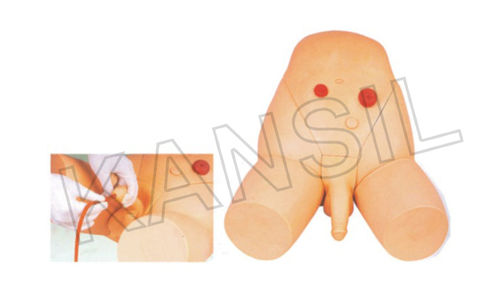
Male Catheterization Training Simulator Model
Product Details:
- Style Training Simulator
- Features Detachable components, soft and realistic penile tissue, visible bladder, functional urethra, fluid outflow simulation
- Assembly Pre-assembled; ready to use
- Use Male urinary catheterization demonstration and practice
- Model No MALE-CATH-TS01
- Weight Approx. 6 kg
- Power Type Non-electric
- Click to View more
X
Male Catheterization Training Simulator Model Price And Quantity
- 100 Box
- Hospitals, nursing colleges, clinical skill labs
- Soft, flexible, and replaceable
- Demonstrates correct and incorrect catheter insertion techniques
- Lubricant gel, sample catheters, carrying case
- Allows outflow of simulated urine for realistic feedback
- Holds simulation fluid for repeated practice
- Washable, autoclavable parts
- Urethral
- Manual simulation
- Included
Male Catheterization Training Simulator Model Product Specifications
- Anatomically accurate male lower torso
- Flesh/skin-tone
- Life-size; approximate length: 60 cm x width: 34 cm x height: 23 cm
- Training Simulator
- Detachable components, soft and realistic penile tissue, visible bladder, functional urethra, fluid outflow simulation
- Male urinary catheterization demonstration and practice
- Pre-assembled; ready to use
- MALE-CATH-TS01
- Medical skills training manikin
- Simulates the process of male urethral catheterization for training purposes
- Realistic anatomical structure, reusable, easy to clean, safe for repeated practice
- Advanced PVC and silicone rubber
- Approx. 6 kg
- Non-electric
- For medical students, nurses, clinicians, and healthcare professionals
- Standard human male adult
- Smooth, skin-like finish
- Hospitals, nursing colleges, clinical skill labs
- Soft, flexible, and replaceable
- Demonstrates correct and incorrect catheter insertion techniques
- Lubricant gel, sample catheters, carrying case
- Allows outflow of simulated urine for realistic feedback
- Holds simulation fluid for repeated practice
- Washable, autoclavable parts
- Urethral
- Manual simulation
- Included
Male Catheterization Training Simulator Model Trade Information
- 500 Box Per Day
- 1 Week
Product Description
Male Catheterization Training Simulator
Features:
- General urethral Catheterization process can be operated.
- There is resistance when advancing the catheter through mucosal fold, bulb of urethra and intraurethral sphincter.
Realistic Catheterization Practice
Refined with anatomically accurate male lower torso design, this simulator delivers a highly authentic training experience. Soft, skin-like tissue, a visible bladder, and a working urethral pathway simulate genuine procedures, providing tactile and visual realism essential for skill acquisition.
Versatile Training Environments
Purpose-built for use in hospitals, nursing colleges, and clinical skill laboratories, this model supports both demonstration and self-directed learning. Its portability and ready-to-use setup, paired with a carrying case, make it ideal for diverse educational settings.
Easy Maintenance and Safe Reusability
With washable, autoclavable parts and a detachable, replaceable penile structure, this training manikin offers simple and thorough cleaning. Its durable materials and reusable components ensure a safe, sustainable solution for repeated procedural practice.
FAQs of Male Catheterization Training Simulator Model:
Q: How is the Male Catheterization Training Simulator Model utilized during training sessions?
A: The simulator is used to practice male urethral catheter insertion techniques. Instructors demonstrate correct and incorrect methods while trainees perform hands-on practice, receiving immediate, realistic feedback through simulation features such as fluid outflow.Q: What makes this simulator suitable for repeated use in educational settings?
A: It is constructed from advanced PVC and silicone rubber, combined with detachable and autoclavable parts, making it easy to clean and safe for repeated practice. Its durable build supports extensive use without loss of anatomical realism.Q: When should this manikin be incorporated into training programs?
A: The model is ideal for training medical students, nurses, and clinicians at any stage requiring proficiency in male urinary catheterizationespecially in structured curricula within hospitals, nursing colleges, or skill labs.Q: Where can this catheterization simulator be effectively used?
A: It is designed for professional environments such as hospitals, clinical skills laboratories, and nursing education institutes. Its portable design and included carrying case also allow for off-site workshops and simulation-based assessments.Q: What does the training process involve with this simulator?
A: Participants use sample catheters and lubricant gel to perform catheter insertion, observing anatomical landmarks and correct procedures. The functional urethra and bladder with simulated urine outflow provide real-time feedback on performance.Q: How does the model demonstrate both correct and incorrect techniques?
A: The simulation mode enables demonstration of the correct path and potential errors in insertion. Incorrect techniques can be identified through resistance, lack of fluid drainage, or anatomical cues, fostering understanding of best practices and potential complications.Q: What benefits do users gain from practicing on this simulator?
A: Training on this model enhances procedural confidence, hones manual skills, and increases patient safety by allowing repeated practice before live patient care. Its lifelike design bridges theoretical learning with practical application.Tell us about your requirement

Price:
Quantity
Select Unit
- 50
- 100
- 200
- 250
- 500
- 1000+
Additional detail
Mobile number
Email

Other Products in 'Medical Models' category


- N. C. KANSIL & SONS
GST : 07AAAFN3555B1ZP - Kansil Bhawan, 8606, Model Basti,New Delhi - 110005, India
- Phone :08045479865
-



- Key Personnel
- Mr. Alok Kansil (Partner)
- Mobile :08045479865
- nck.digimkt@gmail.com
- WHAT'S APP : (+91-9310512020)
 Send Inquiry
 |
N. C. KANSIL & SONS
All Rights Reserved.(Terms of Use) Developed and Managed by Infocom Network Private Limited. |
