
 English
 Spanish
 French
 German
 Italian
 Chinese (Simplified)
 Japanese
 Korean
 Arabic
 Portuguese

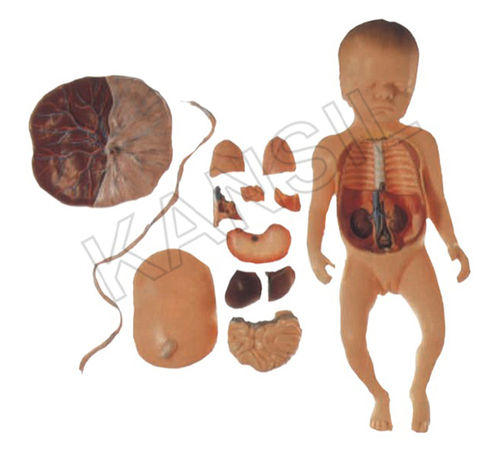
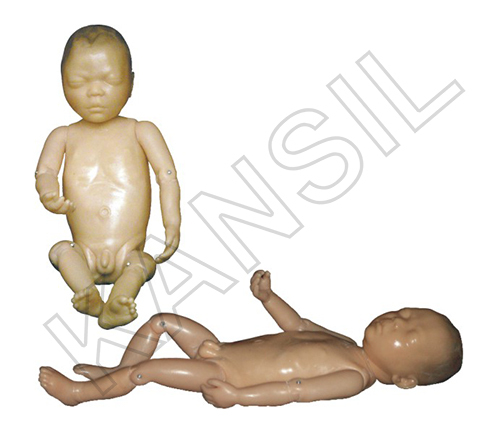
Fetus with Viscera and Placenta Model
Product Details:
- Surface Finish Smooth, Hand Painted
- Use Medical Education, Demonstration
- Weight Approx. 2.5 kg
- Size Life Size
- Material High Quality PVC
- Dimensions Approx. Life size (Fetus: 48 x 30 x 12 cm)
- Age For all age learning groups (Primarily Medical Students)
- Click to View more
X
Fetus with Viscera and Placenta Model Price And Quantity
- 100 Piece
Fetus with Viscera and Placenta Model Product Specifications
- Medical Education, Demonstration
- Approx. Life size (Fetus: 48 x 30 x 12 cm)
- Smooth, Hand Painted
- Approx. 2.5 kg
- Life Size
- High Quality PVC
- For all age learning groups (Primarily Medical Students)
Fetus with Viscera and Placenta Model Trade Information
- 500 Piece Per Day
- 1 Week
Product Description
Details:
- Made of Advanced PVC.
- Shows a female fetus at the end of the pregnancy with placenta and umbilical cord.
- Separated into 13 parts as follow: Placenta, umbilical cord, abdominal cover, lungs, heart, thymus, diaphragm, liver, stomach, intestine, body
Precise Educational Representation
This life-size model provides an accurate representation of a human fetus with visible viscera and placenta, allowing for thorough anatomical study. The large, clear dimensions make it easy to identify key structures, benefiting classrooms and demonstration environments.
Durable and Realistic Construction
Made from high-quality PVC, the model combines durability and realism. The smooth, hand-painted surface ensures that anatomical features are both aesthetically clear and long-lasting, making the model ideal for repeated educational use.
Versatile Learning Tool for All Ages
Although especially valuable for medical students, this model is designed to support learning at various educational levels. Its accessible size and detailed features assist both beginners and advanced learners in understanding fetal development and anatomy.
FAQs of Fetus with Viscera and Placenta Model:
Q: How is the Fetus with Viscera and Placenta Model used in medical education?
A: This model serves as a practical demonstration tool for medical students, allowing them to visually and physically explore fetal anatomy and placental structures. It aids lectures, laboratory classes, and interactive tutorials on prenatal development.Q: What does the model include and what are its dimensions?
A: The model features a life-size fetus with detailed internal organs (viscera) and placenta, measuring approximately 48 x 30 x 12 cm. It is crafted to showcase essential anatomical elements for comprehensive study.Q: When is this model most beneficial during medical education?
A: It is most useful in courses focused on embryology, obstetrics, and gynecology, as well as during clinical skills training. Early exposure using such models supports a deeper understanding of fetal anatomy throughout medical education.Q: Where can this educational model be used effectively?
A: This model is ideally used in medical colleges, nursing schools, training institutes, and health science classrooms. It also fits well in demonstration sessions, practical exams, and teacher-led workshops.Q: What materials are used and how is the model finished?
A: Constructed from high-quality PVC, the model features a smooth, hand-painted finish for authentic anatomical detail and durability, making it suitable for repeated handling and study.Q: What is the process for maintaining and cleaning the model?
A: To maintain its quality, the model should be gently wiped with a soft cloth and mild detergent. Abrasive materials should be avoided to preserve the color and surface finish.Q: What benefits does this model provide for learners and instructors?
A: The model offers hands-on, visual learning that enhances anatomical understanding and retention. Its accurate depiction enables easier communication of complex concepts between instructors and students.Tell us about your requirement

Price:
Quantity
Select Unit
- 50
- 100
- 200
- 250
- 500
- 1000+
Additional detail
Mobile number
Email

Other Products in 'Gynae Models' category


- N. C. KANSIL & SONS
GST : 07AAAFN3555B1ZP - Kansil Bhawan, 8606, Model Basti,New Delhi - 110005, India
- Phone :08045479865
-



- Key Personnel
- Mr. Alok Kansil (Partner)
- Mobile :08045479865
- nck.digimkt@gmail.com
- WHAT'S APP : (+91-9310512020)
 Send Inquiry
 |
N. C. KANSIL & SONS
All Rights Reserved.(Terms of Use) Developed and Managed by Infocom Network Private Limited. |
