
 English
 Spanish
 French
 German
 Italian
 Chinese (Simplified)
 Japanese
 Korean
 Arabic
 Portuguese

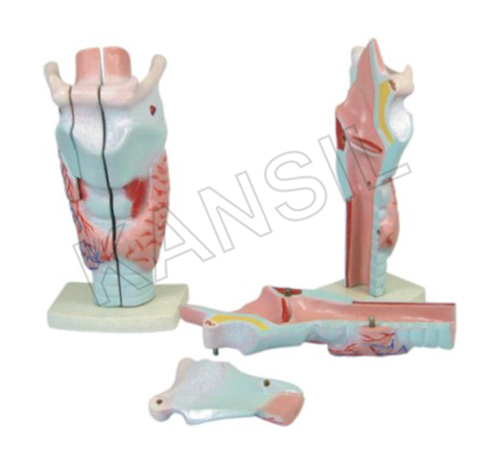
Human Larynx Model Magnified Model
200.00 - 1500.00 INR/Box
Product Details:
- Temperature Resistance Up to 50C
- Display Type 3D Physical Model
- Shape Larynx Shape
- Accuracy Highly Detailed, Precise Molded Sections
- Power Supply Not Required
- Dimension (L*W*H) Approximately 20 cm x 10 cm x 8 cm (Magnified Size)
- Equipment Type Larynx Model
- Click to View more
X
Human Larynx Model Magnified Model Price And Quantity
- 200.00 - 1500.00 INR/Box
- 1 Box
Human Larynx Model Magnified Model Product Specifications
- Larynx Model
- Not Required
- Not Required
- PVC Plastic
- Highly Detailed, Precise Molded Sections
- Approximately 20 cm x 10 cm x 8 cm (Magnified Size)
- Up to 50C
- 3D Physical Model
- Larynx Shape
Human Larynx Model Magnified Model Trade Information
- 500 Box Per Day
- 1 Week
Product Description
Details:- Size 11.5 11 24 cm, 3-parts dissectible
- A functional model, On base 3 times enlarged
- Shows movements of epiglottis & cartilages in the voice box
- Helps to understand the morphology and structure of the respiratory tract and phonetic organ
Detailed Anatomical Representation
This magnified human larynx model delivers a highly accurate and precise representation of laryngeal structures, making it exceptionally useful for both teaching and demonstration. Each section is clearly defined, supporting effective anatomical learning at various educational levels.
Built for Durability and Ease of Use
Crafted from resilient PVC plastic, the model offers impressive durability and resistance to temperatures up to 50C. As it requires no power supply, the model is easy to handle and can be displayed or used in diverse environments without additional equipment.
FAQs of Human Larynx Model Magnified Model:
Q: How can the Human Larynx Model be used in anatomical studies?
A: The model serves as a visual aid for explaining the function and structure of the larynx in anatomy classes, training sessions, and medical demonstrations, allowing learners to interact with an enlarged, highly detailed replica.Q: What materials are used to manufacture this larynx model?
A: This model is constructed from durable PVC plastic, which provides both longevity and clear anatomical detail, ensuring it withstands regular handling and educational use.Q: When is it beneficial to use a magnified larynx model over diagrams or digital resources?
A: A magnified 3D physical model is especially beneficial during hands-on demonstrations or when complex anatomical features need to be observed closely, which flat diagrams or digital images may not sufficiently convey.Q: Where is this model commonly utilized?
A: The model is widely employed in educational institutions, research facilities, hospitals, and training centers across India and is also exported internationally for academic and professional instruction.Q: What processes are used to achieve the detailed accuracy of the sections?
A: Precision molding techniques are implemented to create highly detailed and accurate sections of the larynx, ensuring each anatomical part is clearly distinguishable for study and demonstration.Q: What are the main benefits of using this model in teaching environments?
A: Using a detailed, physical model enhances comprehension of anatomical structures, facilitates hands-on learning, and supports more engaging, effective instruction compared to purely theoretical or two-dimensional resources.Tell us about your requirement

Price:
Quantity
Select Unit
- 50
- 100
- 200
- 250
- 500
- 1000+
Additional detail
Mobile number
Email

Other Products in 'Human Anatomical Models' category


- N. C. KANSIL & SONS
GST : 07AAAFN3555B1ZP - Kansil Bhawan, 8606, Model Basti,New Delhi - 110005, India
- Phone :08045479865
-



- Key Personnel
- Mr. Alok Kansil (Partner)
- Mobile :08045479865
- nck.digimkt@gmail.com
- WHAT'S APP : (+91-9310512020)
 Send Inquiry
 |
N. C. KANSIL & SONS
All Rights Reserved.(Terms of Use) Developed and Managed by Infocom Network Private Limited. |
