
 English
 Spanish
 French
 German
 Italian
 Chinese (Simplified)
 Japanese
 Korean
 Arabic
 Portuguese

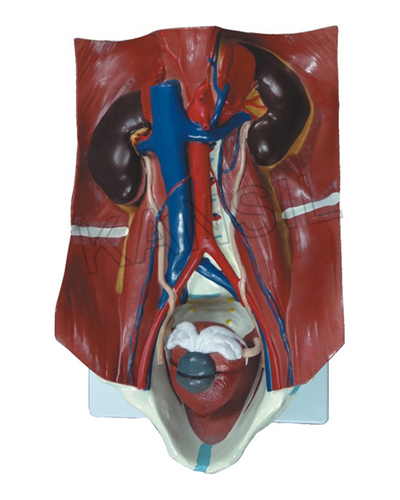
Urinary System Model
Product Details:
- Shape 3D Human Urinary System
- Accuracy Detailed anatomical accuracy
- Display Type Physical 3D Model
- Features Removable parts, Hand-painted, Realistic details
- Control Type Manual (Non-electric)
- Type Anatomical Model
- Dimension (L*W*H) Approx. 40 cm x 23 cm x 6 cm
- Click to View more
X
Urinary System Model Price And Quantity
- 1 Box
- Suitable for school, college, and professional education
- Approx. 1.2 kg
- Mounted on baseboard for stability
- Washable and easy to disinfect
- Kidneys, Ureters, Bladder, Urethra
- Smooth, non-toxic paint finish
- Distinctive color separation for each organ
Urinary System Model Product Specifications
- Removable parts, Hand-painted, Realistic details
- Manual (Non-electric)
- Educational, Demonstration, Medical Study
- Physical 3D Model
- High-quality PVC
- PVC Plastic
- Detailed anatomical accuracy
- Anatomical Teaching Model
- 3D Human Urinary System
- Anatomical Model
- Approx. 40 cm x 23 cm x 6 cm
- Suitable for school, college, and professional education
- Approx. 1.2 kg
- Mounted on baseboard for stability
- Washable and easy to disinfect
- Kidneys, Ureters, Bladder, Urethra
- Smooth, non-toxic paint finish
- Distinctive color separation for each organ
Urinary System Model Trade Information
- 500 Box Per Day
- 1 Week
Product Description
Urinary System Model
- The Model shows the structures of retroperition alcavity, pelvis with bones and muscles, inferior venacava, aorta with its branches, upper urinary tract, kidney with adrenal gland, ureter, bladder, etc.
- Dissectible into 4 parts.
Detailed Anatomical Representation
This urinary system model features highly accurate anatomical detailing, making it invaluable for medical education and professional demonstration. Each organ is distinctly color-coded and hand-painted, enabling clear identification and comprehensive understanding during training sessions or lectures.
Durable and Hygienic Construction
Manufactured from premium PVC plastic, the model ensures durability and longevity even with regular classroom or laboratory use. Its smooth, washable surface allows for easy cleaning and disinfection, maintaining hygiene standards required in educational and healthcare settings.
Versatile Educational Application
Suitable for a wide array of users, including school students, college learners, and medical professionals, this model supports various levels of teaching and demonstration. Its removable parts and 3D construction facilitate interactive learning and hands-on exploration of human urinary system anatomy.
FAQs of Urinary System Model:
Q: How do I clean and disinfect the Urinary System Model?
A: The smooth, non-toxic PVC surface allows you to simply wash the model with soap and water or disinfectants. Regular cleaning maintains hygiene, especially in classroom or clinical demonstration settings.Q: What organs are included in this anatomical model?
A: The model displays the kidneys, ureters, bladder, and urethra, each separated by distinctive color coding for clearer visualization and educational clarity.Q: When is this urinary system model most beneficial for use?
A: This model is ideal for use during lessons, presentations, and demonstration sessions in schools, colleges, clinics, and hospitals, supporting both beginner and advanced medical education.Q: Where can the model be displayed or used?
A: Its sturdy baseboard allows stable placement on tables, desks, or display surfaces in classrooms, laboratories, and medical offices, ensuring safety and visibility during demonstrations.Q: What is the process for using the model for educational purposes?
A: Instructors and students can interact with the removable parts to study each organs structure and function. The color-coded layout aids in tracing the flow of urine and understanding anatomical relationships.Q: What are the key benefits of this 3D urinary system model?
A: Benefits include detailed anatomical accuracy, realistic hand-painted finishes, removable components for closer examination, and versatility across a range of educational and medical environments.Tell us about your requirement

Price:
Quantity
Select Unit
- 50
- 100
- 200
- 250
- 500
- 1000+
Additional detail
Mobile number
Email

Other Products in 'Human Anatomical Models' category


- N. C. KANSIL & SONS
GST : 07AAAFN3555B1ZP - Kansil Bhawan, 8606, Model Basti,New Delhi - 110005, India
- Phone :08045479865
-



- Key Personnel
- Mr. Alok Kansil (Partner)
- Mobile :08045479865
- nck.digimkt@gmail.com
- WHAT'S APP : (+91-9310512020)
 Send Inquiry
 |
N. C. KANSIL & SONS
All Rights Reserved.(Terms of Use) Developed and Managed by Infocom Network Private Limited. |
